Description
FGL – NCAM-Derived FGFR1 Agonist Research Peptide
FGL (FG loop peptide) is a synthetic 15-amino-acid peptide derived from the neural cell adhesion molecule (NCAM). Its sequence corresponds to the FG loop region of the second fibronectin type III module of NCAM, which structural work identified as part of the binding site for fibroblast growth factor receptor 1 (FGFR1). NMR and surface plasmon resonance studies mapped a direct interaction between the NCAM F3 modules and the FGFR Ig2–3 modules, and showed that the isolated module could induce receptor phosphorylation and stimulate neurite outgrowth.
NCAM is an immunoglobulin-superfamily adhesion molecule involved in cell–cell interactions during nervous system development, in synaptic plasticity and in regeneration. Part of its activity is mediated not by homophilic adhesion but by heterophilic engagement of FGFR, and FGL was designed to reproduce that specific interaction without the rest of the molecule. It is consequently used as a tool compound for separating FGFR-dependent effects of NCAM from its adhesive functions in experimental systems.
Published work with FGL is entirely preclinical, carried out in primary neuronal cultures, hippocampal slices and rodents. No conclusions about effects in humans can be drawn from this literature.
Key Research Areas
NCAM–FGFR1 Interaction: Used to probe how the FG loop region of NCAM engages FGFR1, following structural characterization of the NCAM F3 module and its binding site on the receptor.
Presynaptic Function and Synaptogenesis: In primary cultures of hippocampal neurons, FGL has been reported to enhance presynaptic function through FGFR1 activation and to promote synapse formation.
Memory Consolidation Models: Investigated in rats, where intracerebroventricular administration after fear conditioning or water maze training was associated with longer-lasting retention in those tasks.
AMPA Receptor Trafficking: Examined in hippocampal CA1 neurons in connection with synaptic delivery of AMPA receptors and NMDA receptor-dependent long-term potentiation.
Long-Term Potentiation: Studied in hippocampal CA1 recordings, where a long-lasting enhancement of synaptic transmission was reported alongside changes in receptor trafficking.
Neuropharmacological Tool Use: Applied in experimental systems to dissociate FGFR-mediated signaling from the adhesive functions of NCAM, since the peptide reproduces the receptor interaction without the rest of the molecule.
Product Details
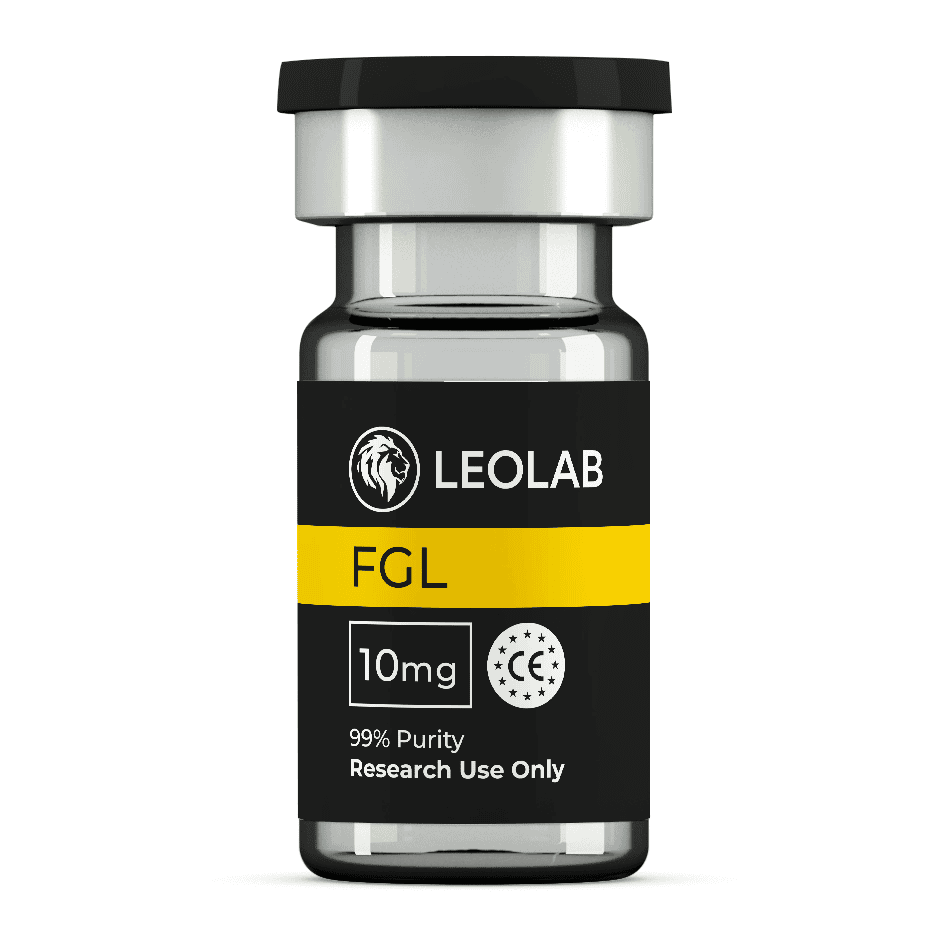
- Name: FGL
- Type: Research peptide
- Quantity: 10mg per vial
- Form: Lyophilized powder
- Purity: ≥99%
- Storage: Store at 2–8°C, protected from light and moisture
- Use: For laboratory research use only. Not for human consumption.
Selected literature
- Kiselyov V.V., Skladchikova G., Hinsby A.M., et al. Structural basis for a direct interaction between FGFR1 and NCAM and evidence for a regulatory role of ATP. Structure, 2003;11(6):691–701. https://doi.org/10.1016/S0969-2126(03)00096-0
- Cambon K., Hansen S.M., Venero C., et al. A synthetic neural cell adhesion molecule mimetic peptide promotes synaptogenesis, enhances presynaptic function, and facilitates memory consolidation. Journal of Neuroscience, 2004;24(17):4197–4204. https://doi.org/10.1523/JNEUROSCI.0436-04.2004
- Knafo S., Venero C., Sánchez-Puelles C., et al. Facilitation of AMPA receptor synaptic delivery as a molecular mechanism for cognitive enhancement. PLoS Biology, 2012;10(2):e1001262. https://doi.org/10.1371/journal.pbio.1001262