Description
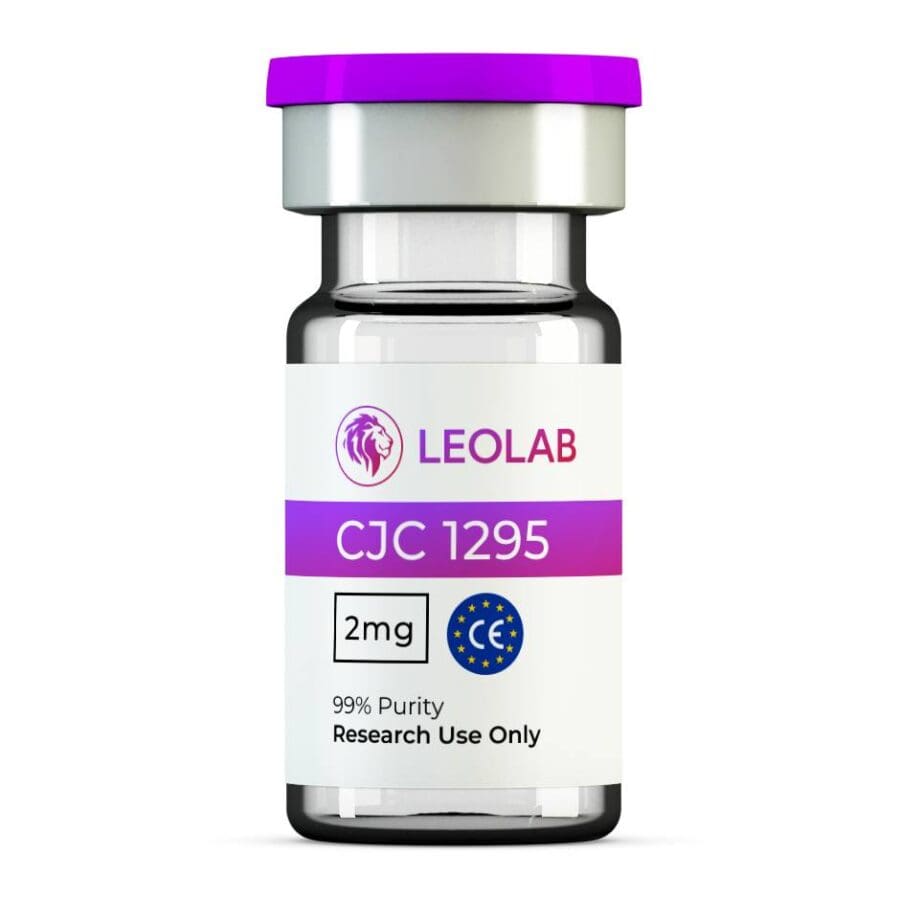
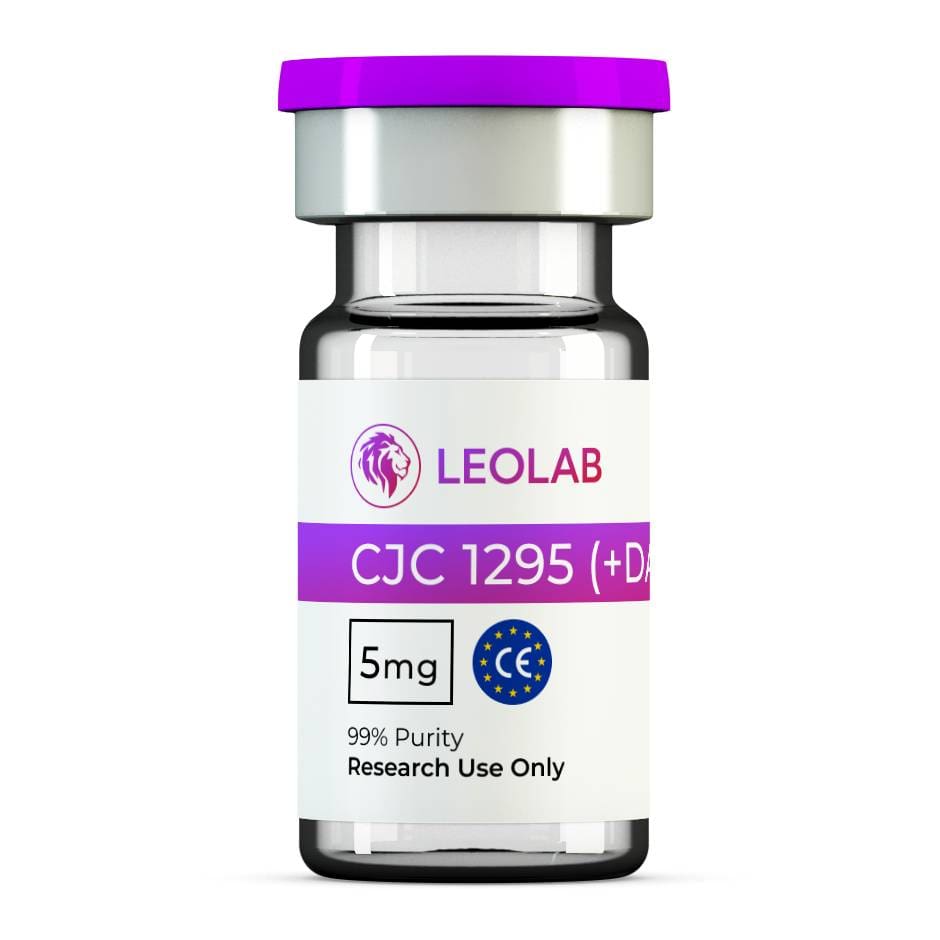
CJC-1295 with DAC – Albumin-Binding GRF Analog Research Peptide
CJC-1295 with DAC is a growth hormone-releasing factor analog built on the Mod GRF 1-29 scaffold: the 29-residue amino-terminal fragment of human growth hormone-releasing factor carrying D-Ala at position 2, Gln at position 8, Ala at position 15 and Leu at position 27. To that sequence is added a Drug Affinity Complex (DAC) group, a maleimidopropionyl moiety attached at a lysine extending the chain, designed to form a covalent bond with a free thiol on circulating serum albumin after administration.
The design addresses a limitation of the underlying fragment. Growth hormone-releasing factor was characterized in 1982 from a human pancreatic islet cell tumor, and the synthetic 1–29 amide fragment was shown to retain full intrinsic activity and potency of the parent hormone in vitro, making it the standard minimal construct. Its practical difficulty is clearance. The four substitutions address enzymatic and chemical liabilities: position 2 blocks dipeptidyl peptidase IV cleavage, and replacement of Asn8 removes the deamidation site that converts the peptide to a biologically inactive isoaspartate form. The DAC group addresses a separate problem, renal clearance of a small peptide, by attaching it to a large circulating carrier protein.
Two cautions are worth recording. Product listings in this category frequently print the sermorelin sequence beside this compound; sermorelin is a different peptide with a different formula. Listings also frequently carry the formula of the non-DAC form, which describes the unconjugated peptide and not the albumin-binding conjugate.
Key Research Areas
GHRH Receptor Pharmacology: Used as an agonist at the growth hormone-releasing factor receptor in pituitary preparations.
Albumin Conjugation Chemistry: Studied as a worked example of covalent attachment to a circulating carrier protein as a half-life extension strategy.
Comparative Clearance: Examined against the unconjugated Mod GRF 1-29 form to separate the contributions of sequence substitution and carrier binding.
Dipeptidyl Peptidase IV Resistance: The position-2 substitution is studied as the element blocking aminopeptidase cleavage.
Deamidation Chemistry: The Asn8 to Gln8 substitution is examined in work on the isoaspartate conversion and the loss of activity accompanying it.
Structure-Activity Relationships: Applied in the analog series defining which positions tolerate substitution without loss of potency.
Product Details
- Name: CJC-1295 with DAC
- Type: Research peptide
- Quantity: 5mg per vial
- Form: Lyophilized powder
- Purity: ≥98% (HPLC verified)
- Storage: Store at 2–8°C, protected from light and moisture
- Use: For laboratory research use only. Not for human consumption.
No molecular formula or molecular weight is stated: published figures for the DAC conjugate are inconsistent, and the formula most often reproduced for this product is in fact that of the unconjugated non-DAC peptide.
Selected literature
- Rivier J., Spiess J., Thorner M., Vale W. Characterization of a growth hormone-releasing factor from a human pancreatic islet tumour. Nature, 1982;300(5889):276–278. https://doi.org/10.1038/300276a0
- Lance V.A., Murphy W.A., Sueiras-Diaz J., Coy D.H. Super-active analogs of growth hormone-releasing factor (1–29)-amide. Biochemical and Biophysical Research Communications, 1984;119(1):265–272. https://doi.org/10.1016/0006-291X(84)91647-4
- Ling N., Esch F., Bohlen P., Brazeau P., Wehrenberg W.B., Guillemin R. Isolation, primary structure, and synthesis of human hypothalamic somatocrinin: growth hormone-releasing factor. Proceedings of the National Academy of Sciences USA, 1984;81(14):4302–4306. https://doi.org/10.1073/pnas.81.14.4302